
Guests decide how they feel about your hotel long before they check out. A confusing arrival, a question nobody could answer fast enough, a recommendation they never got — each one chips away at a review that could've been five stars. Most of that friction traces back to one thing: guests don't have a good source of information about your property, and staff spend their day being that source manually, one guest at a time.
The pain points hotels are actually dealing with
The front desk answers the same ten questions all day. Wifi password, checkout time, where's a good breakfast spot, does the pool close early — these repeat constantly, and every minute spent on them is a minute not spent on the guest standing in front of the desk with an actual problem.
Paper binders are always out of date. Prices change, restaurants close, house rules get updated — and the binder in room 204 still says the old ones. Reprinting is slow and gets skipped, so guests end up working from stale information, or no information at all.
International guests are quietly underserved. A binder printed in one language does nothing for the growing share of guests booking from abroad. They either struggle through it or give up and interrupt staff, and either way the stay feels less considered than it should.
Local recommendations get lost or never shared. The best restaurant near your property, the quiet beach the guidebooks miss, the walking route with the good view — if that knowledge lives in one staff member's head, most guests never hear it. That's a missed chance to make the stay memorable, not just adequate.
A rough guest experience shows up in your reviews, and reviews decide your next booking. A large share of travelers check reviews before booking, and consistently poor ratings are enough to make many of them choose somewhere else. The stay itself is the review before it's even written.
What a comprehensive digital guest guide actually changes
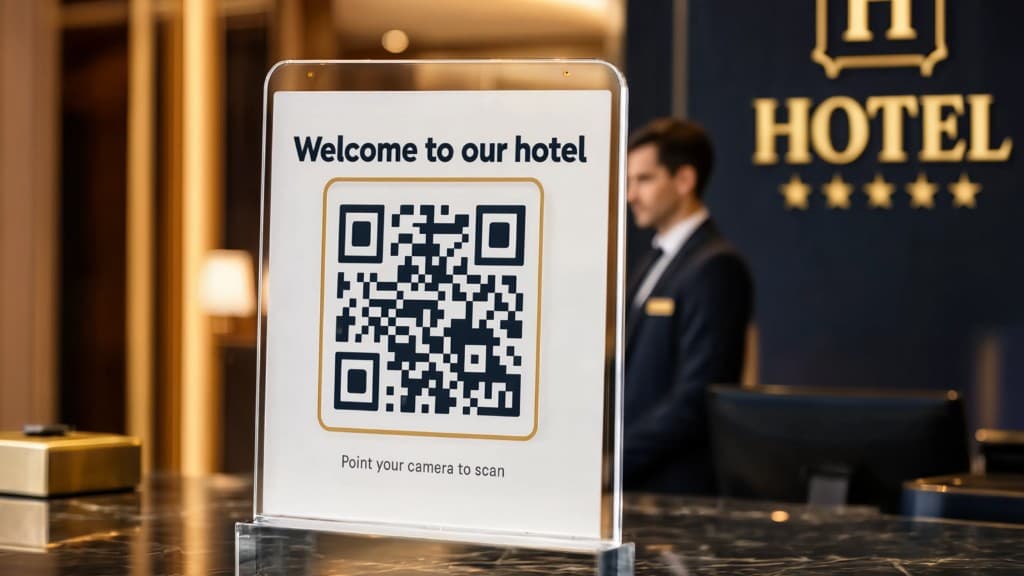
Guests get answers instantly, without finding staff. Wifi, checkout, amenities, local tips — all in one place, accessible the moment they scan a QR code at check-in. No app to download, no waiting on hold.
Your team gets time back. Every question answered by the guide is one your front desk didn't have to field in person. That adds up over a full season, especially at smaller properties running lean.
Every guest gets it in their language. A guide that translates automatically means your non-English-speaking guests get the same clear, welcoming experience as everyone else — not a downgraded one.
Content stays current without a reprint. Update a price, swap a recommendation, fix a typo — it's live everywhere instantly. No boxes of outdated binders sitting in a supply closet.
A well-designed stay experience compounds into loyalty. Guests who feel looked after are meaningfully more likely to leave a strong review and meaningfully more likely to book again directly, rather than searching from scratch next time. A guide that makes the stay feel considered — not just functional — is doing real work toward that repeat booking, not just answering FAQs.
It's a small, visible signal of how the property is run. A polished digital guide, branded to match your hotel, tells guests something about the level of care behind the property before they've even unpacked. That impression carries into how they rate the stay overall.
Where Goloby fits
This is exactly the gap Goloby is built to close, without asking a small independent hotel to take on a full guest-experience platform to do it. If you're weighing Goloby against a broader guest journey tool, start with Goloby vs Duve, Goloby vs Sunver, or Goloby vs Canary.
- The wizard drafts the content for you. Instead of staring at a blank template, you answer a few prompts and AI writes a first draft of your guide — amenities, house rules, local recommendations — so you're editing, not starting from zero.
- Guests get it in their own language automatically. AI translation runs the moment you save or publish, so a guide built once in English reaches guests in their preferred language without extra work on your end.
- One QR code, no app, no friction. Guests scan and land straight on their guide — placed at reception, in-room, wherever makes sense for your property.
- It's built for one hotel getting it right, not an enterprise suite. Single flat pricing, a 7-day free trial with no credit card, and a setup that takes minutes rather than a sales cycle.
- A private-label option exists for hotels that want something fully custom-designed rather than working from the standard build.
A digital guest guide won't fix everything about the guest experience. But it closes one of the most common, most fixable gaps — the moment right after check-in when a guest either feels oriented and cared for, or left to figure it out alone. That moment shapes the review, and the review shapes the next booking.